
Prostate Cancer:
Bladder cancer is a common type of cancer affecting the urinary system, predominantly in men but also in women. It originates from abnormal growth in the bladder’s lining cells. Early detection and effective treatment are crucial, especially as the disease advances. Key risk factors include smoking, chemical exposure, and chronic infections. The main types are transitional cell carcinoma, squamous cell carcinoma, and adenocarcinoma. Symptoms often include blood in urine, painful urination, and frequent urination. Treatment varies by stage and may include surgery, chemotherapy, radiation, and targeted therapy. Regular follow-up is essential, and recent advances in immunotherapy and gene therapy offer new treatment possibilities.
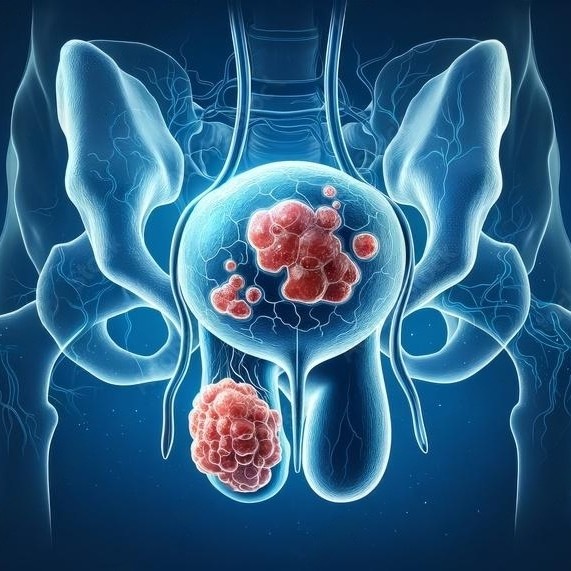
Prostate cancer is a type of cancer that originates in the prostate gland, a small gland located below the bladder in men. The prostate plays a crucial role in producing seminal fluid that nourishes and helps sperm move. Prostate cancer is one of the most common cancers among men, especially after the age of 50.
Symptoms and Signs:
In its early stages, prostate cancer may not cause noticeable symptoms. However, as the disease progresses, symptoms may include:
Difficulty urinating or weak urine flow.
Frequent need to urinate, especially at night.
Feeling of not being able to completely empty the bladder.
Pain or burning sensation during urination.
Presence of blood in the urine or semen.
Pain in the lower back, hips, or thighs if the cancer has spread to the bones.
It is important to note that these symptoms can also be caused by other conditions, such as benign prostatic hyperplasia (BPH), so consulting a doctor is essential for accurate diagnosis.
Risk Factors:
Several factors may increase the risk of developing prostate cancer, including:
Age: The risk of prostate cancer increases with age, particularly after 50.
Family History: Having relatives with prostate cancer increases your risk.
Race: Men of African descent are at higher risk for prostate cancer.
Diet: A diet high in animal fats and low in fiber may increase the risk.
Diagnosis:
Common diagnostic methods for prostate cancer include:
PSA Blood Test: Measures the level of prostate-specific antigen (PSA) in the blood.
Digital Rectal Exam (DRE): A physical examination to check for abnormalities in the prostate.
Multiparametric MRI (mpMRI): Provides detailed images to locate and assess the tumor.
Bone Scan: Detects if cancer has spread to the bones.
CT Scan: Assesses spread to nearby organs or lymph nodes.
PSMA PET-CT Scan: A modern technique used increasingly to diagnose and monitor prostate cancer, especially in cases of recurrence or to locate metastatic disease.
These imaging techniques are essential for evaluating the patient’s condition and planning the appropriate treatment.
Treatment Options:
Treatment for prostate cancer depends on several factors, including the stage of the cancer, its growth rate, overall health, and personal preferences. Treatment options include:
-
Active Surveillance: For slow-growing cancer that does not cause symptoms, monitoring the condition regularly without immediate intervention.
-
Surgery: Includes radical prostatectomy to remove the prostate gland. Effective for localized cancer.
-
Radiation Therapy: Uses radiation to destroy cancer cells. Suitable for patients who prefer not to have surgery or have advanced cases.
-
Hormone Therapy: Aims to lower hormone levels that fuel cancer growth, such as testosterone.
-
Chemotherapy: Used for advanced cancer or when other treatments have not worked, employing drugs to kill or slow the growth of cancer cells.
Prevention:
While there is no guaranteed way to prevent prostate cancer, a healthy lifestyle can help reduce the risk. Recommendations include a balanced diet, regular exercise, and maintaining a healthy weight.
Summary:
Prostate cancer is a common disease that can be effectively treated if detected early. It is crucial for men to be aware of risk factors and symptoms and to undergo regular screenings, especially if they are of a certain age or have a family history of the disease. Consulting a specialist in urology and oncology can provide an accurate assessment and personalized treatment plan.
Sources:
-
Huntsman Cancer Institute, University of Utah Health: Provides a comprehensive overview of prostate cancer, including symptoms such as difficulty urinating, blood in urine or semen, and pelvic pain. It also discusses diagnostic methods like the PSA test and digital rectal exams, and various treatment options including surgery, radiation therapy, and hormone therapy.
-
Winship Cancer Institute of Emory University: Highlights the importance of early diagnosis and discusses risk factors such as age, race, and family history. It also outlines prevention strategies, including a healthy diet, regular exercise, and maintaining a healthy weight.