
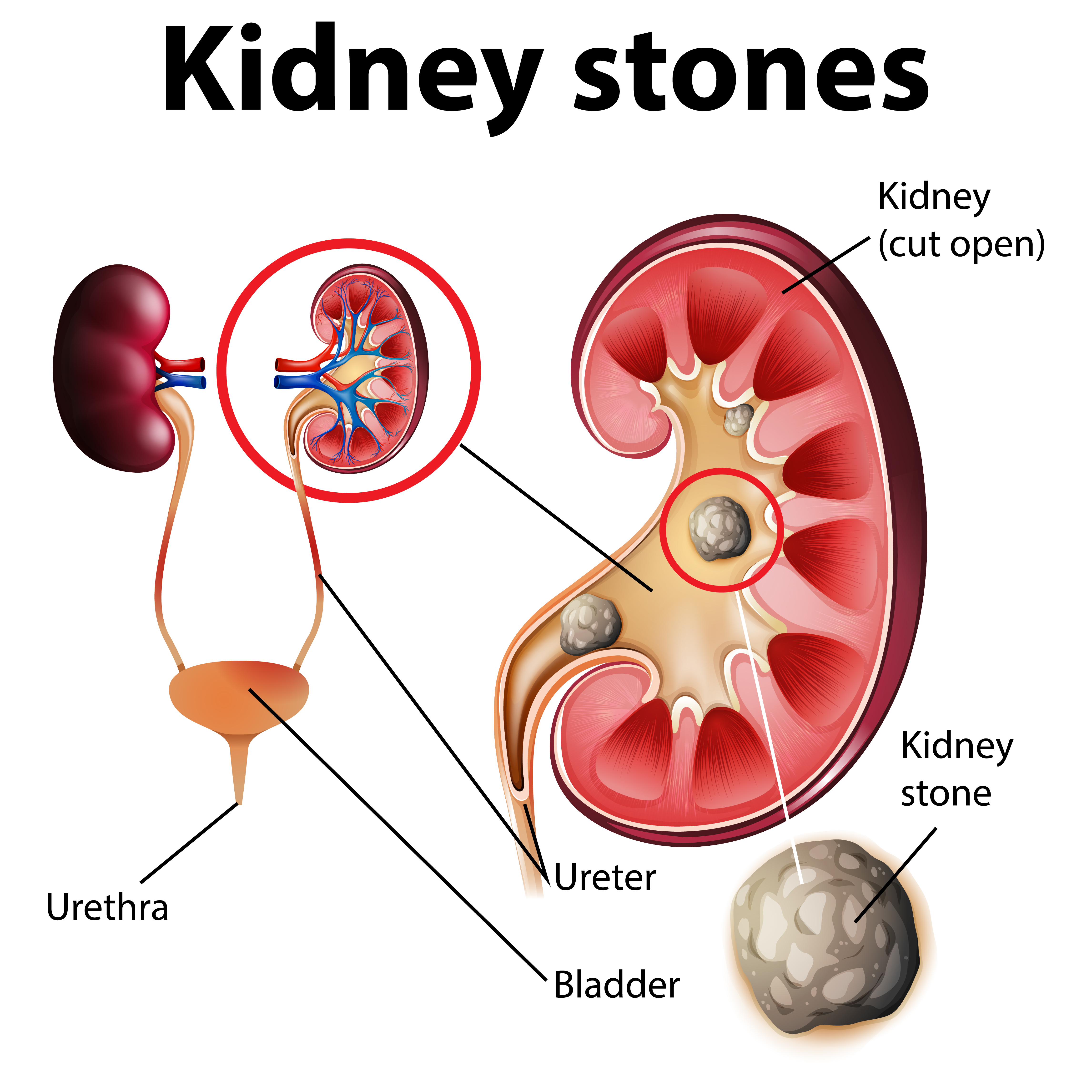
Urinary Tract Stones(Kidney, Ureter, Bladder,and Urethral Stones)
Urinary tract stones, or kidney stones, are solid masses formed from minerals and salts in the urinary system, often caused by dehydration, diet, genetics, or chronic conditions. Types include calcium, uric acid, struvite, and cystine stones. Symptoms range from severe back pain and nausea to blood in the urine. Diagnosis involves imaging like X-rays or CT scans. Treatments vary from increased water intake and medications to procedures like shock wave therapy or ureteroscopy. Prevention focuses on staying hydrated and adjusting diet based on the type of stone.
Kidney Stones (Renal Calculi) are solid masses composed of minerals and salts that accumulate within the kidneys. These stones can form in any part of the urinary system, including the kidneys, ureters, bladder, or urethra. Kidney stones are among the most common conditions affecting the urinary tract.
Types of Kidney Stones:
Calcium Stones: Account for about 80% of kidney stone cases. They typically consist of calcium oxalate or calcium phosphate.
Uric Acid Stones: These form due to high concentrations of uric acid in the urine and are more common in individuals with gout or those who consume a protein-rich diet.
Struvite Stones: These are often the result of urinary tract infections and can sometimes be large in size.. Cystine Stones: Occur due to a hereditary disorder that leads to excessive excretion of cystine in the urine.
Causes of Kidney Stones:
Dehydration: Insufficient water intake increases the concentration of minerals and salts in the urine, leading to stone formation.
Diet: Consuming large amounts of protein, sodium, and sugar increases the risk of stone formation.
Genetics: Some individuals are more prone to stone formation due to hereditary factors.
Chronic Conditions: Such as gout, recurrent urinary tract infections, and gastrointestinal disorders.
Hormonal Imbalances: Including issues with parathyroid hormone imbalance.
Symptoms:
The symptoms depend on several factors, including the size and location of the stones:
Severe, sudden pain in the back or side if the stone causes a blockage in the ureter.
Pain radiating to the lower abdomen and groin area.
Blood in the urine.
Nausea and vomiting.
Persistent urge to urinate.
Fever if there is an associated infection.
Diagnosis:
X-rays or Ultrasound Imaging: Used to locate and determine the size of the stones.
Urinalysis: Helps in detecting the presence of blood or crystals, indicating the presence of stones.
Chemical Analysis of Stones: Performed after the stones are passed to determine their type and potential causes.
Non-Contrast CT Scan: This is the gold standard for diagnosing stones, as it provides nearly 100% accuracy in identifying the size and location of urinary tract stones.
Treatment:
The treatment of kidney stones depends on the size and location of the stones and the underlying cause of their formation:
Conservative Management: Small stones may pass naturally with increased water intake, pain relievers, and medications to relax the ureters.
Extracorporeal Shock Wave Lithotripsy (ESWL): Uses sound waves to break larger stones into smaller pieces that can be more easily passed.
Ureteroscopy: Involves using a scope to visualize and break up smaller stones with a laser. This is now the most common treatment, even for larger stones.
Surgery:
Surgery may be required for large or complex stones. The approach depends on the size and location of the stones.
Medications to prevent atone recurrence:
If the stones are caused by calcium accumulation, medications such as thiazide diuretics may be prescribed to reduce calcium levels in the urine.
For uric acid stones, medications like allopurinol may be prescribed to lower uric acid levels in the blood. Additionally, urine alkalization can be used to dissolve existing kidney stones and prevent recurrence in selected cases.
Pain relief and medications to facilitate the passage of stones are also available.
Dietary Changes:
If the stones are caused by certain foods, dietary changes may be recommended. For example, reducing oxalate-rich foods like spinach and nuts may be advised if the stones are oxalate-based.
Treating Underlying Causes:
In some cases, treatment may focus on managing an underlying condition that causes stones, such as hyperparathyroidism or gout.
Treatment is highly individualized based on the patient’s condition and primarily guided by the doctor’s assessment, making it essential to follow medical advice for proper management.
Prevention:
Drink sufficient water (around 2-3 liters per day).
Reduce salt and animal protein intake
Follow a balanced diet with adequate calcium (without excess).
Some studies suggest that fluids like water and coffee may reduce the risk of stone formation, while sugary soft drinks may increase this risk.
Sources:
Medical articles in:
The New England Journal of Medicine
The Journal of Urology
Recent reviews from:
The National Kidney Foundation
Research published in Mayo Clinic Proceedings and The Lancet